
Food environment
Make the easier choice visible
Keeping nourishing ingredients ready can reduce the work involved in putting together a meal.
Weight regulation
Weight is influenced by biology, environment, sleep, stress, medication and many other factors. Food is one part of a wider picture.
Sustainable change is usually built from understanding, not urgency.
Everyday context
Meals with protein, fibre and enough volume can be satisfying. Eating slowly, planning accessible options and noticing hunger cues may help some people, but there is no universal formula.
People living with eating disorders, chronic conditions or significant weight changes should seek individual support from a GP or registered dietitian.
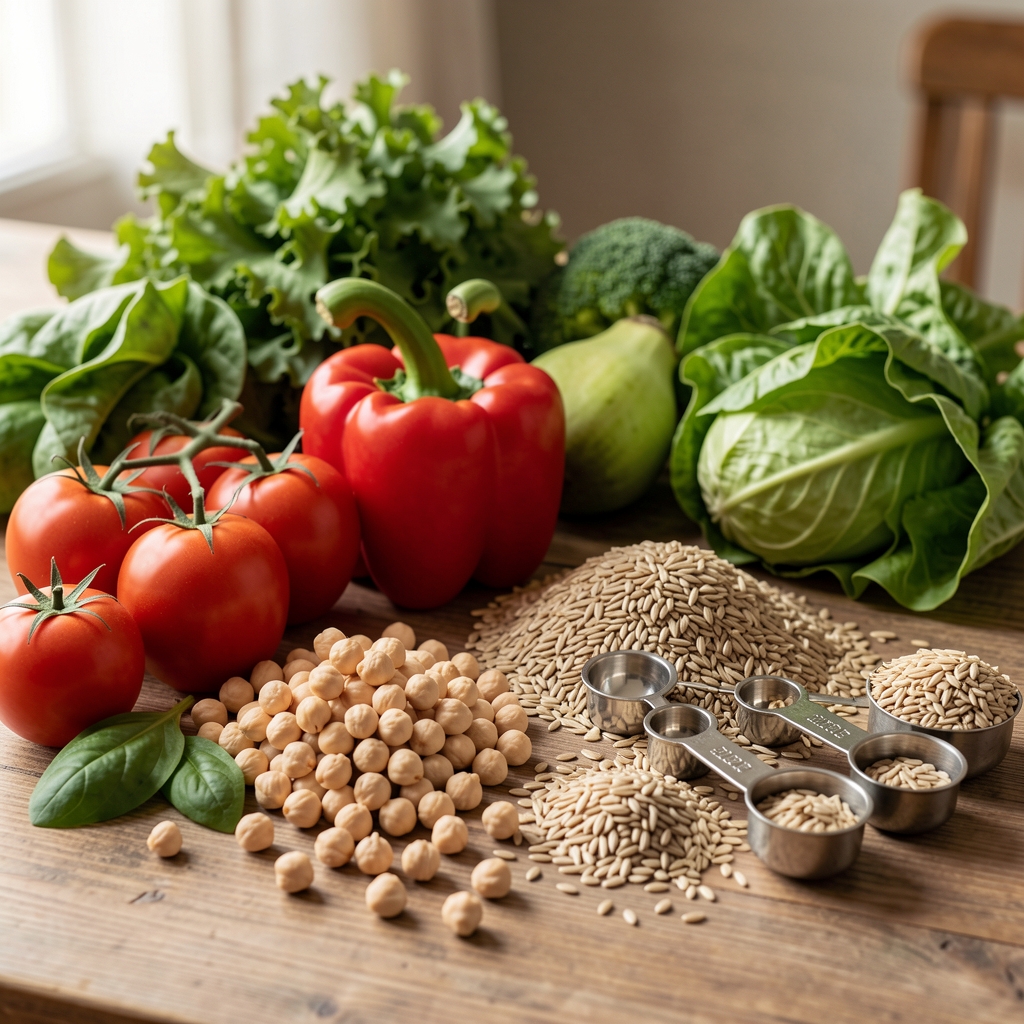
Food environment
Keeping nourishing ingredients ready can reduce the work involved in putting together a meal.
Routine
Energy, strength, mood, sleep and daily function can all offer useful information.
Support
Weight stigma can make healthcare harder to access; respectful professional support matters.
A practical roadmap
These steps are prompts for reflection, not a prescription. A GP or registered dietitian can adapt support when a person has a medical condition, takes medicines or has a difficult relationship with food.
| Influence | Question to consider | Possible support |
|---|---|---|
| Sleep | Is tiredness affecting appetite or planning? | Discuss persistent sleep concerns with a professional |
| Environment | Are nourishing options convenient at home or work? | Prepare flexible staples and make them visible |
| Stress | Does pressure change timing or pace of eating? | Consider practical support and compassionate routines |
| Medication | Could a medicine affect appetite or weight? | Ask the prescriber; do not alter it independently |
“A sustainable routine has to fit the life it is meant to support.”
“Weight is one measure, not a complete description of health.”
“Compassion improves the quality of a food conversation.”
Weekly checklist
A record should inform curiosity rather than create pressure. Avoid tracking practices that increase distress, and ask for help if food or weight thoughts are becoming intrusive.
Weight stigma can affect whether people seek care and how their concerns are heard. A useful conversation considers symptoms, function, history, preferences and access to food, rather than assuming a single explanation.
Contact the editorial deskFood and weight can become difficult subjects when shame, restriction, binge eating, pain, fatigue or rapid changes are involved. In those circumstances, a compassionate professional conversation is more appropriate than a rigid online plan. A GP can consider the wider picture and refer to a registered dietitian or specialist service where suitable.
Novalus presents general information only. The editorial desk at 27 Elmwood Lane, Stratford-upon-Avon, Warwickshire, CV37 6BB, United Kingdom can answer publishing questions on +44 161 893 7201.